IEMs are one of the few audio items I buy new, although I have a few that were bought used from pawn shops or eBay where the new retail price was a little high for me. One example is the CCA Hydro, which has been my daily driver on some KZ AN01 ear hooks for the past few months.
Last month, I decided it was time to try some actual CrinEar models after having the Truthear Red and Blue, along with the second 7Hz collab model, for a while. My initial impressions were captured in my IEM inventory comment column as follows:
These arrived 9/25/2026 and spent two hours with my Lindsey Webster charts playlist on Tidal with the CrinEar Protocol Micro USB-C dongle plugged into the USB port on my MiniPC that acts as a streamer. I used the medium tips with the black markings. The tips were fine for initial listening session and felt a tad short but had a good seal. I tried a couple EQ settings with PEACE. One from PEQdB and squig.link with the options being PEQdB Diamond Beta and IEM Preference 2025 and found both to be too drastic and made the IEMs sound muffled and I left EQ off for this session. For me the tuning pretty close to my personal preference with more attention brought to the highs than most IEMs I have. Taps on the high hats, shakers, and Lindsey’s whispy airy highs were clear and noticeable in a good way. The bass was not overbearing and mids are there but not the expense of losing the highs and bass. I am looking forward to spending some more time with these and doing a little bit of tip rolling, but these are a solid set and will try my other option for the audio path of MiniPC, Dx3 Pro+, SMSL SP200 amp with the 4.4mm balanced plug option tomorrow.
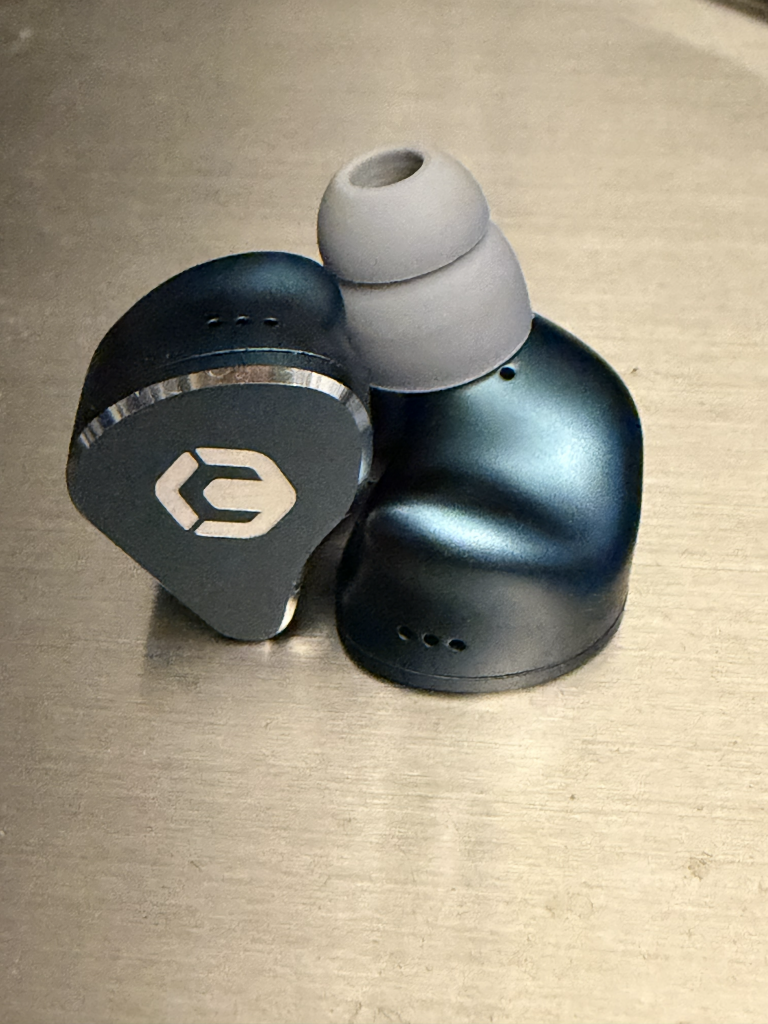
So, I got back to these today and spent some time trying various tips. I found that I really could not get satisfactory bass extension with any of the stock tips, including the foam tips. I am not a foam fan anyway, so that’s not unexpected.
What I ended up with are some double-flanged tips, which comes as no surprise to me since I have the same tips on my Simgot EW300 and new CCA Phoenix sets. I even tried the Franken-tips where I took the double-flanged tips and cut off the larger flange next to the IEM. They worked, but the actual double-flanged tip was better.
I am now into hour three of listening, with Tidal as my source running through my USB-connected tube DAC, a Douk P1, initially with its treble and bass adjustments turned off.
The Nightfall is bright and definitely not boomy, but I feel like the factory tuning is trying to get some bass in there and doesn’t quite provide enough for my liking. With the P1’s tone controls turned on, I have the bass knob at almost 2 o’clock while the treble sits at almost 11 o’clock. I could probably take the bass back to about 1 or 1:30 and be okay.
Separation is noticeable, with a good soundstage on today’s playlist.
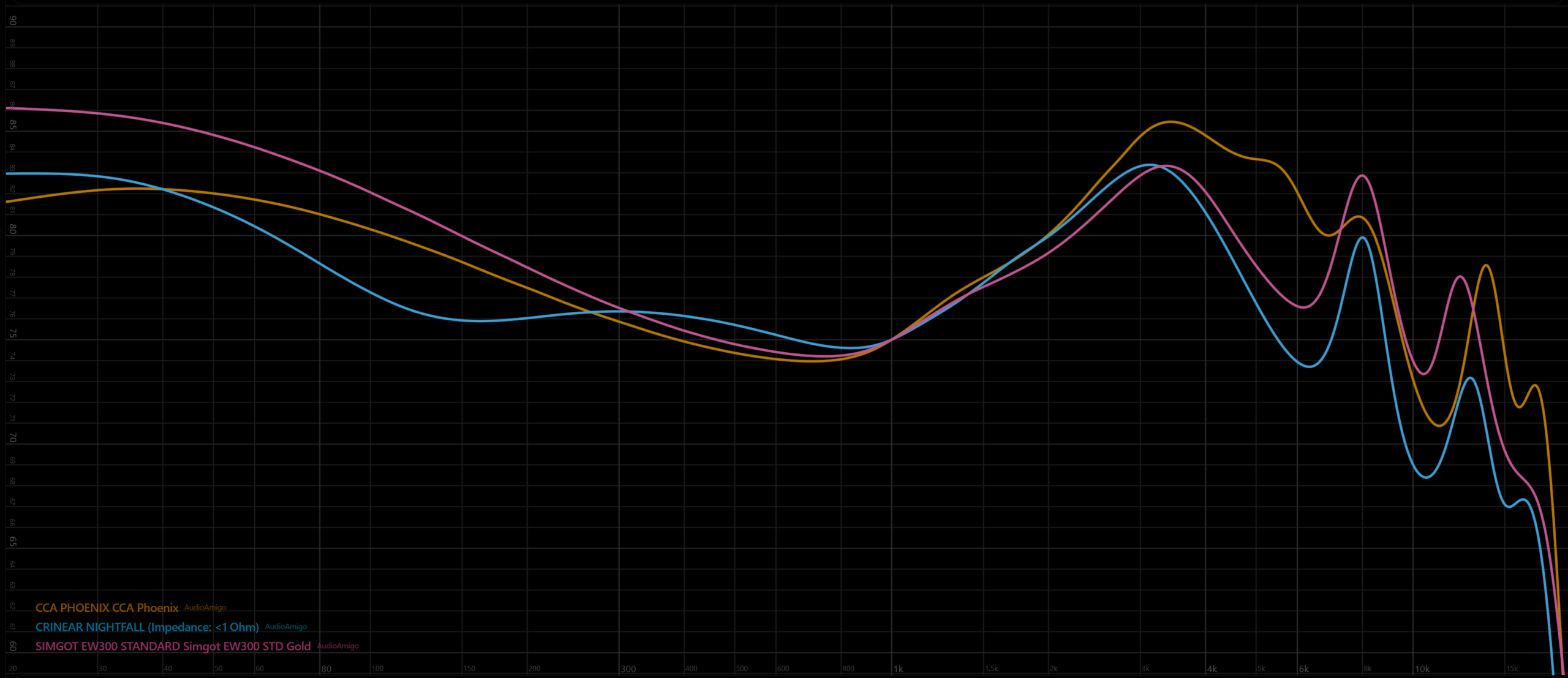 For the tuning comparison, the easiest way I found to get the other two IEMs onto the same graph without a bunch of exporting and importing in Squig.Link was PEQdB, from everyone’s favorite audio instigator. For the actual hangout.audio graph here is the link.
For my actual listening comparison, I am using one of Lindsey Webster’s newer releases, “What Is Meant to Be.” The song gives me quite a bit to work with: isolated synth-organ, drums and vocals, cymbal work, and plenty of left-right interplay to judge separation. The lead guitar eventually works its way back in to end the piece that began with solo bongos before building into the full ensemble and vocals at the start.
Starting with the Nightfall, Lindsey’s vocals are forward without being overbearing. There is a bridge lead-in with some high-treble chimes that also gives the Nightfall a chance to show what it does up top.
With the tone controls turned off, there are a few noticeable differences to me. First, the treble is brighter, although I would not call it too bright. Second, the mids take a more forward position. The bass is lower, but a little sub-bass still manages to get through. All in all, even without using the tone controls to add bass and cut treble, the Nightfall is still a decent listening experience.
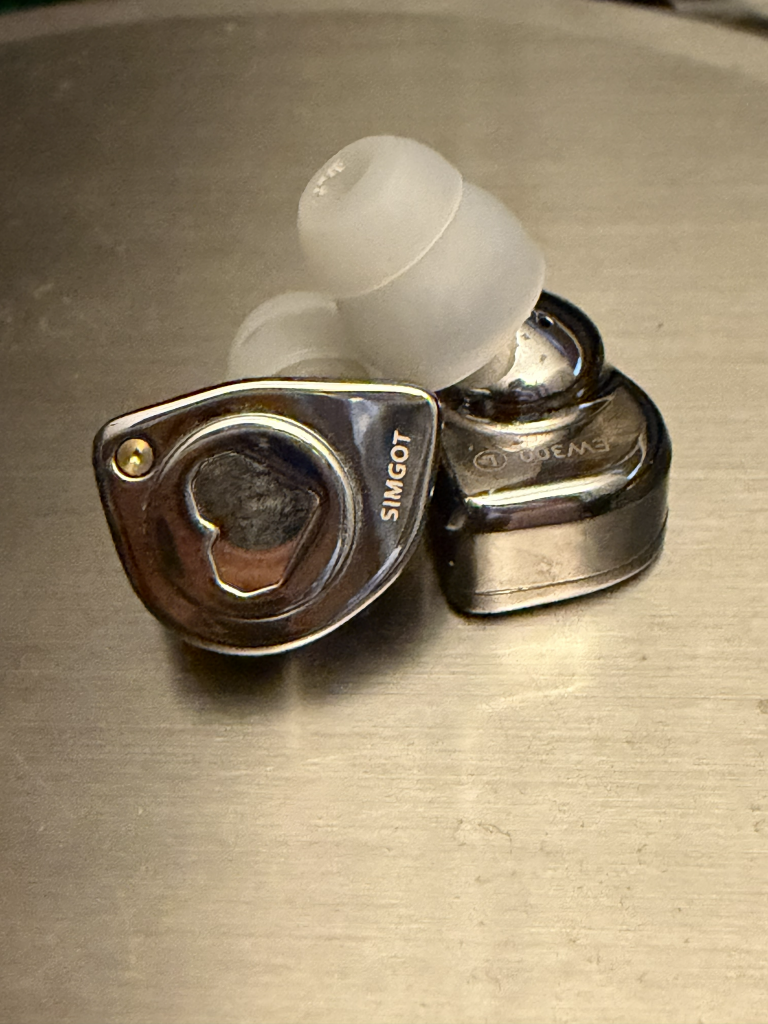 The Simgot EW300, with no tone control, is also bright and has some sizzle or sibilance around 8K. On the other hand, its bass through sub-bass needs no assistance. The mids into the lower treble are very similar to the Nightfall, but by the end of the song I am seeking some relief from the cymbal highs. I can’t complain about the vocals, though.
On the CCA Phoenix from ND Audio, the bass is a little reserved but definitely there, and I would not add any tone boost for my liking. The high treble also has s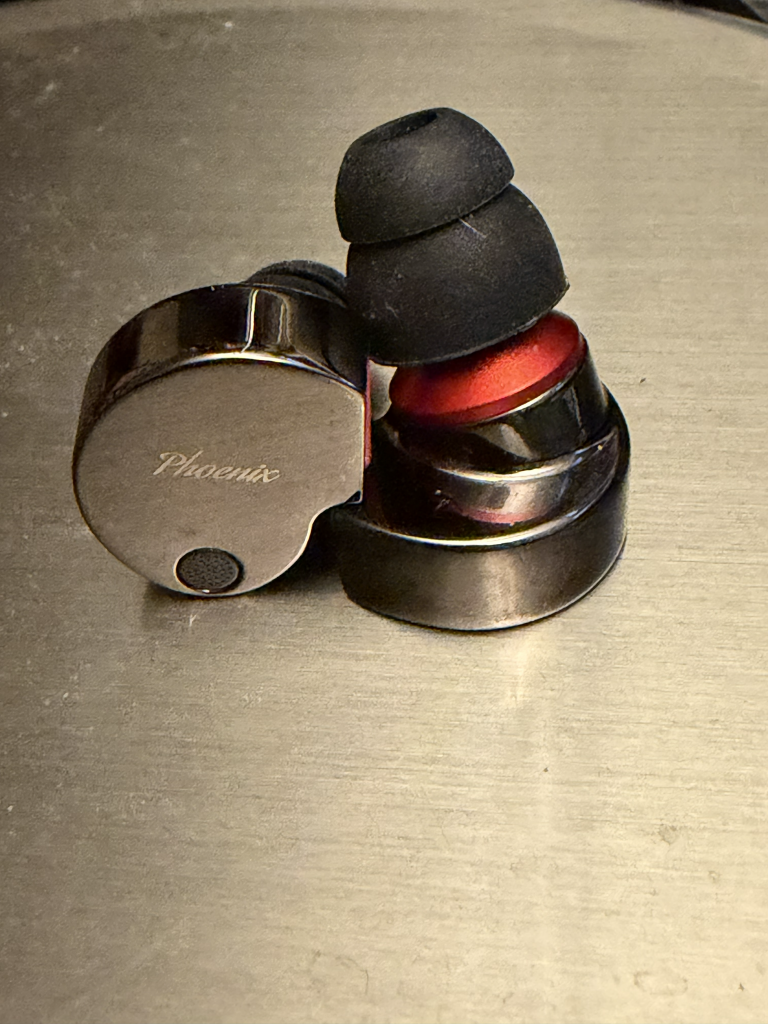 ome sibilance, but not as much as the EW300. Vocals are a little more forward compared with the Nightfall and EW300, to the point that I might EQ them down somewhat from 3–4K.
So, from tonight’s listening session, I have to say the Nightfall came out on top, mainly because its treble strikes a better balance for me. Some of the other songs I listened to, such as Chris Standring’s “Liquid Soul,” didn’t have me reaching for EQ at all.
From a comfort standpoint, all three have metal shells, and all had the same double-flanged tips installed, which seem to have become my go-to tips lately. The weights with cables are included in the specifications below, along with the graphs above. As I mentioned before, the nozzles seem a little shallow to me, and the longer double-flanged ear tips help with all three.
Looking at the other CrinEar-branded IEMs, the Nightfall is almost bargain-basement pricing with an introductory price of $99, that includes the CrinEar USB-C dongle, compared with the high-end Project Monolith at $400 and the Reference at $350. Its value proposition gets a little more complicated, though, when compared with the $170 Daybreak.
I don’t own any of those other CrinEar models, so I can’t make a direct sound comparison. Given Crinacle’s experience with IEM tuning, I suspect the pricing reflects the realities of what it takes to develop and bring each model to market. And, as with the rest of the IEM market, spending $350, $400 or even $1,000 certainly doesn’t guarantee that a particular tuning will be more enjoyable to an individual listener but I can’t help but think the CrinEar models offer better value than the boutique brands.
For my preferences and with the right tips, the Nightfall gets quite a lot right. It could use a little more bass for my taste, but its controlled treble, good separation, and overall balance made it the winner of these three during tonight’s listening session.
| Specification | Nightfall | EW300 | Phoenix |
|---|---|---|---|
| Drivers | 2 DD | 1 DD + Planar + Piezo | 1 DD |
| Impedance | 9 Ω | 28 Ω | 33 Ω |
| Sensitivity | 104 dB | 121 dB | 108 dB |
| Frequency Response | 2 Hz–38 kHz | 8 Hz–50 kHz | 20 Hz–40 kHz |
| Connector | 0.78 mm 2-pin | 0.78 mm 2-pin | 0.78 mm 2-pin |
| Termination | 3.5 mm | 3.5 mm | USB / 3.5 mm |
| Weight (IEM Only) | 15g | 20g | 23g |
| Price | $99.99* | $55.99 | $36.00 |
* Included the CrinEar Protocol Micro (USB Dongle) & Silicon Case