Every once in a while, a routine walk through a local pawn shop pays off. I had spotted an NAD 7155 Stereo Receiver sitting on the shelf a few months ago. Originally marked at $250, it had languished long enough to get moved over to the clearance table at $159 that was now Buy One Get One free. After a quick chat with the manager about just wanting to buy the NAD, he agreed to 50% of the current price I walked out the door with this mid-1980s, Made-in-Japan classic for just a hair over $80 after tax.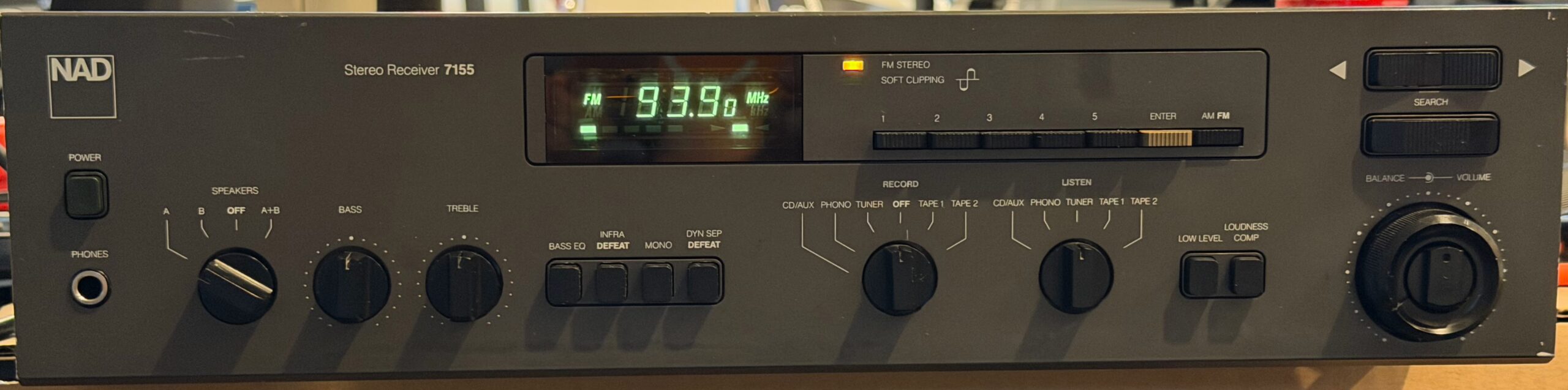
When this unit hit the market around 1984, it retailed for a cool $600—which translates to roughly $1,780+ in today’s money. Given NAD’s legendary “Power Envelope” design, its conservative 55-watts-per-channel rating punches way above its weight class, delivering massive dynamic headroom. It also boasts a fantastic, low-noise internal phono stage with selectable capacitance for both Moving Magnet (MM) and Moving Coil (MC) cartridges. It was a steal, provided I could get it working properly.
The Diagnostic Puzzle: The “Always On” Speakers
Once I got it on the bench (my kitchen island), I ran a standard headphone test. The audio was clean and perfect through the cans, confirming the main amplifier circuit was healthy. However, when I hooked up a pair of test speakers, I ran into a major quirk: the speakers stayed on permanently.
On standard 1980s NAD architecture, inserting a headphone plug into the jack should physically break the circuit to the speakers via mechanical shunts, or you should be able to kill the signal completely using the front-panel Speaker A/B selector buttons. Instead, I had simultaneous headphone and speaker output no matter what I did.
My initial suspicion was that a previous owner had bypassed a scratchy, failing speaker selector switch by soldering jumper wires directly across the contacts inside. It’s a common, albeit lazy, “hack” to avoid fixing vintage mechanical switches.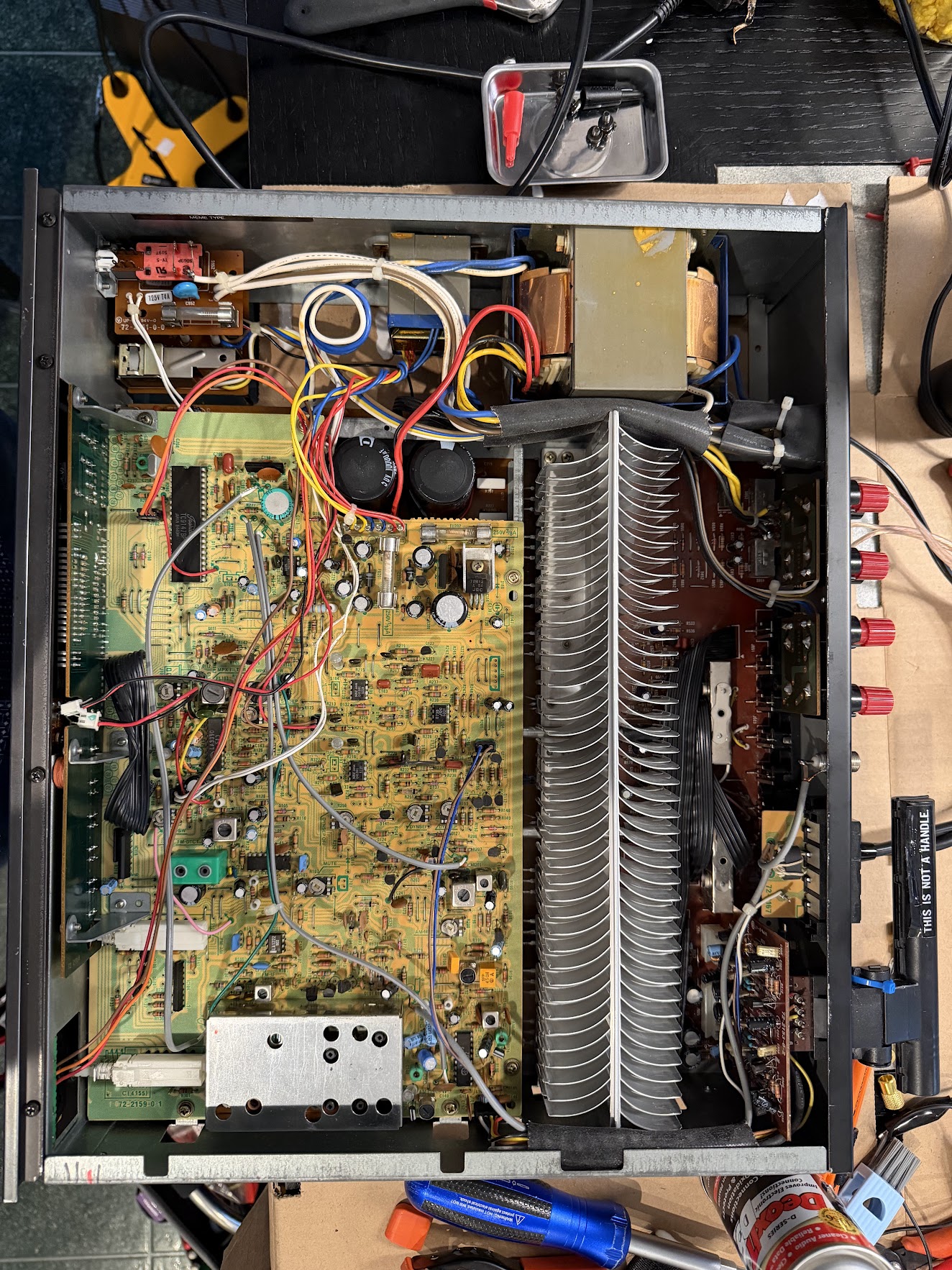
Popping the Hood and Finding the Culprit
I decided to clean up the pots first, hitting the volume and balance controls with some DeoxIT to clear up some minor scratchiness. That immediately brought back crisp, clean sound adjustments.
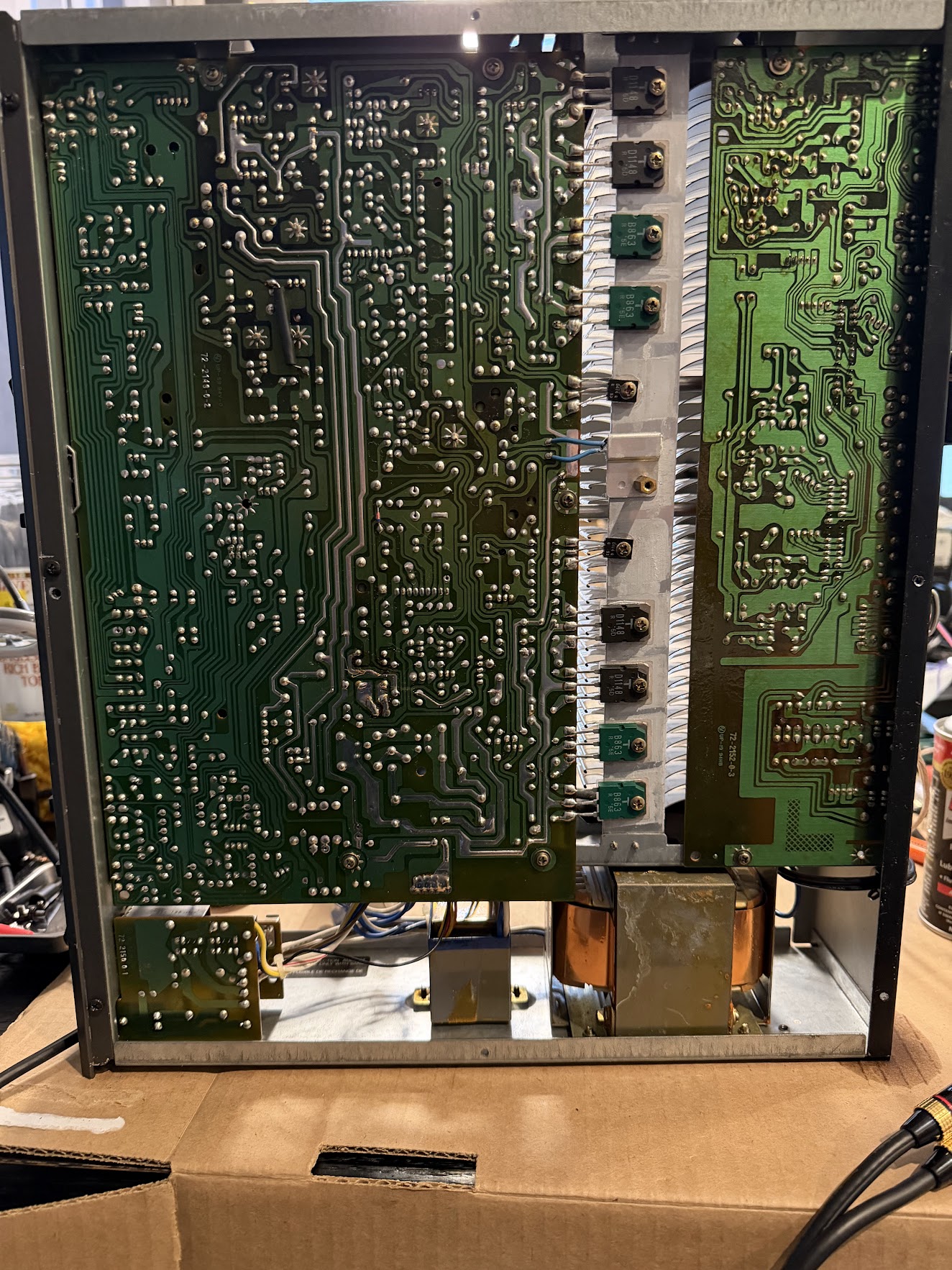
Next, I pulled the front-panel control board to inspect the speaker selector and headphone jack matrix. To my surprise, there weren’t any rogue jumper wires bypassing the circuit. Instead, I found signs of a previous repair attempt. The prior owner had reflowed the solder joints on the back of the speaker selector board but had been a bit too heavy-handed with the iron.
Right there on the pins of the speaker selector switch was a distinct solder bridge—an accidental short across the contacts that effectively locked the speaker circuit into a permanent “on” position.
The Fix
 Fixing it was straightforward bench work:
-
I used some desoldering braid to completely clean up the sloppy factory and post-factory solder on the switch pins.
-
I cleanly resoldered the entire section of the board, ensuring crisp isolation between every contact.
-
While the board was out, I worked some DeoxIT into the mechanical switch housing—cycling it dozens of times to scrape away decades of oxidation—and thoroughly cleaned the headphone jack shunts.
After letting everything dry, I put it all back together for a test run. Success! The speaker selector now toggles flawlessly with zero static, and plugging in headphones cuts the speaker feed exactly as the factory intended.
Where It Fits in the Collection
While the 7155 has the muscle and impedance switching to drive a pair of massive passive PA speakers in a pinch, this particular unit is getting an assignment much closer to its audiophile roots.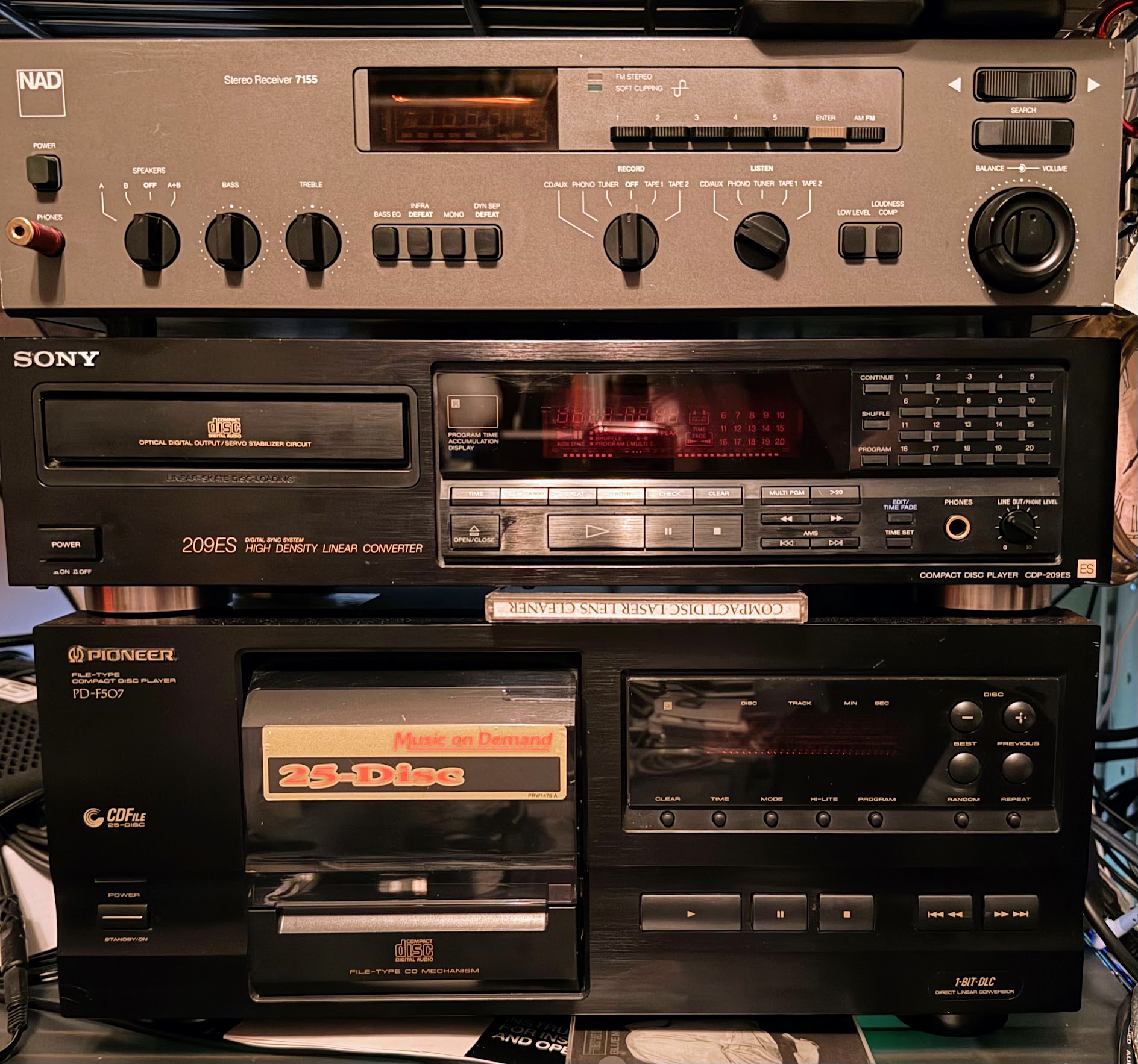
I’m setting it up as a dedicated, high-end headphone listening station. It will be fed by a couple of vintage CD players in my collection: my single-play Sony CDP-209ES and a 25-disc Pioneer PDF-507 changer. To bridge the digital gap, the digital out (toslink) signal will pass through toslink switcher to my SMSL SU-1 DAC.
Because NAD engineered these receivers to tap the headphone jack directly off the beefy main amplifier section through dropping resistors, it has an effortless, warm headroom that modern budget headphone amps just can’t touch.
Not bad for an afternoon on the bench and an $80 investment. Eventually I will test the phono input, but for a fun “see if I can fix it or make better” this one was not as bad as I thought it was going to be to get a working unit for my money.