 The Pawn Shop Find
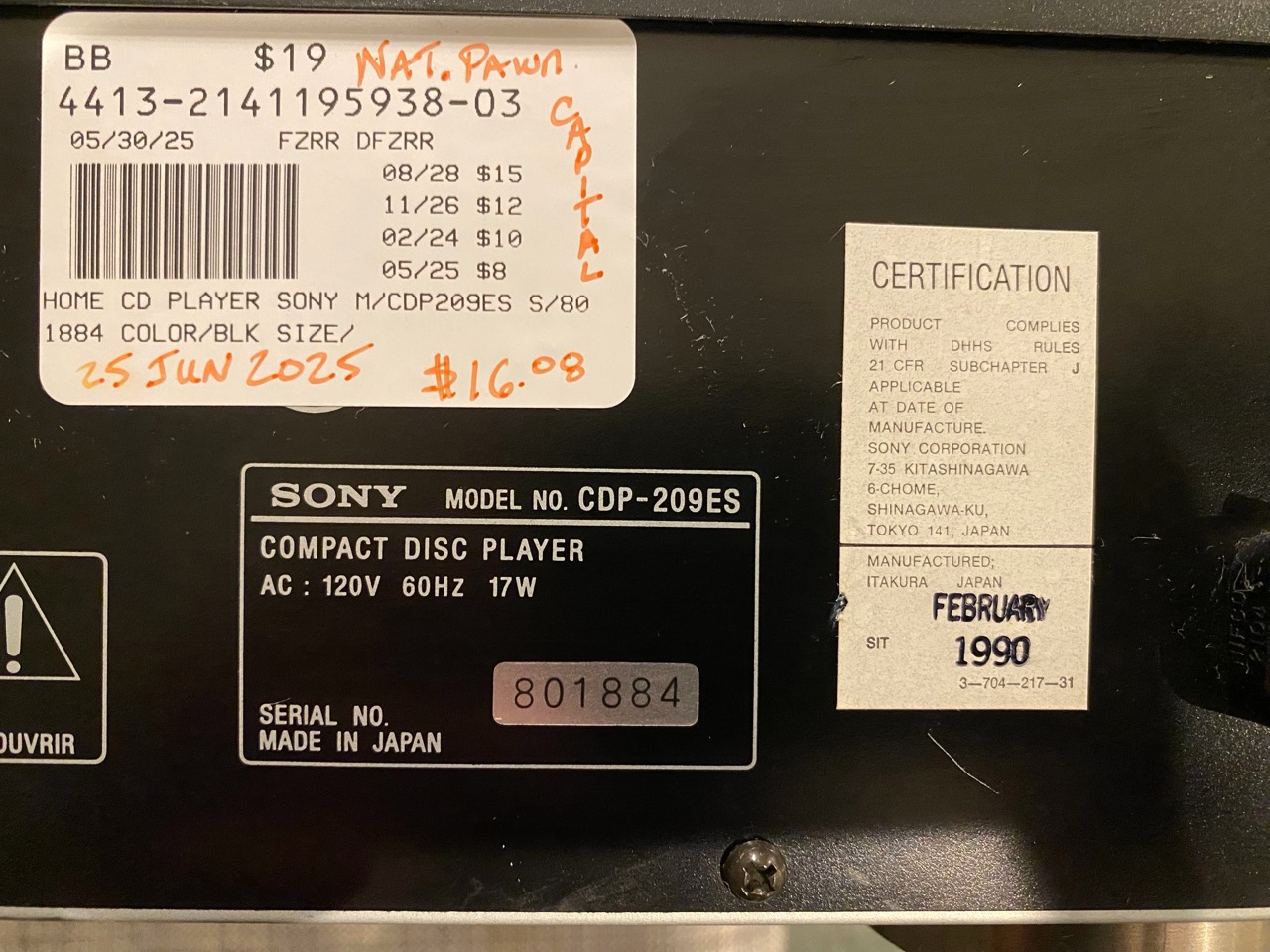
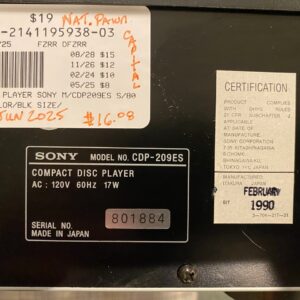
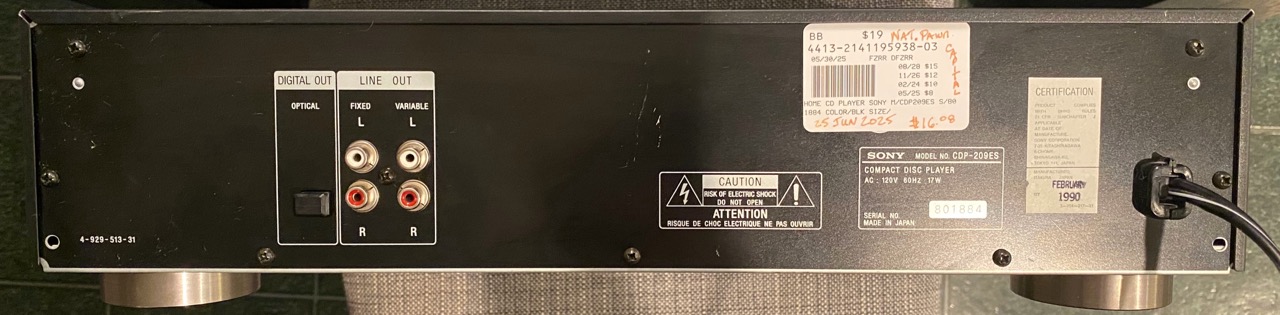
Several months ago I bought this CD player at my local National Pawn shop. It was listed for $19 and I think I paid $16 out the door. I verified the tray opened and closed before I bought it, but I didn’t have a CD with me to test playback. For $16, I felt it was worth the risk.
Once home, I loaded a disc and waited for the familiar whirring spin-up… and nothing. Nada. Zilch. 🙁
We were heading to my in-laws for dinner, so I didn’t have time to dig into it. I took my laptop with me and did what any reasonable person would do — searched YouTube during the nightly news and Jeopardy. I found a few videos on fixing Sony CD players from this era, though nothing specific to the CDP-209ES.
One theme kept coming up: dirty reed switches.
Leaf Switch Resurrection
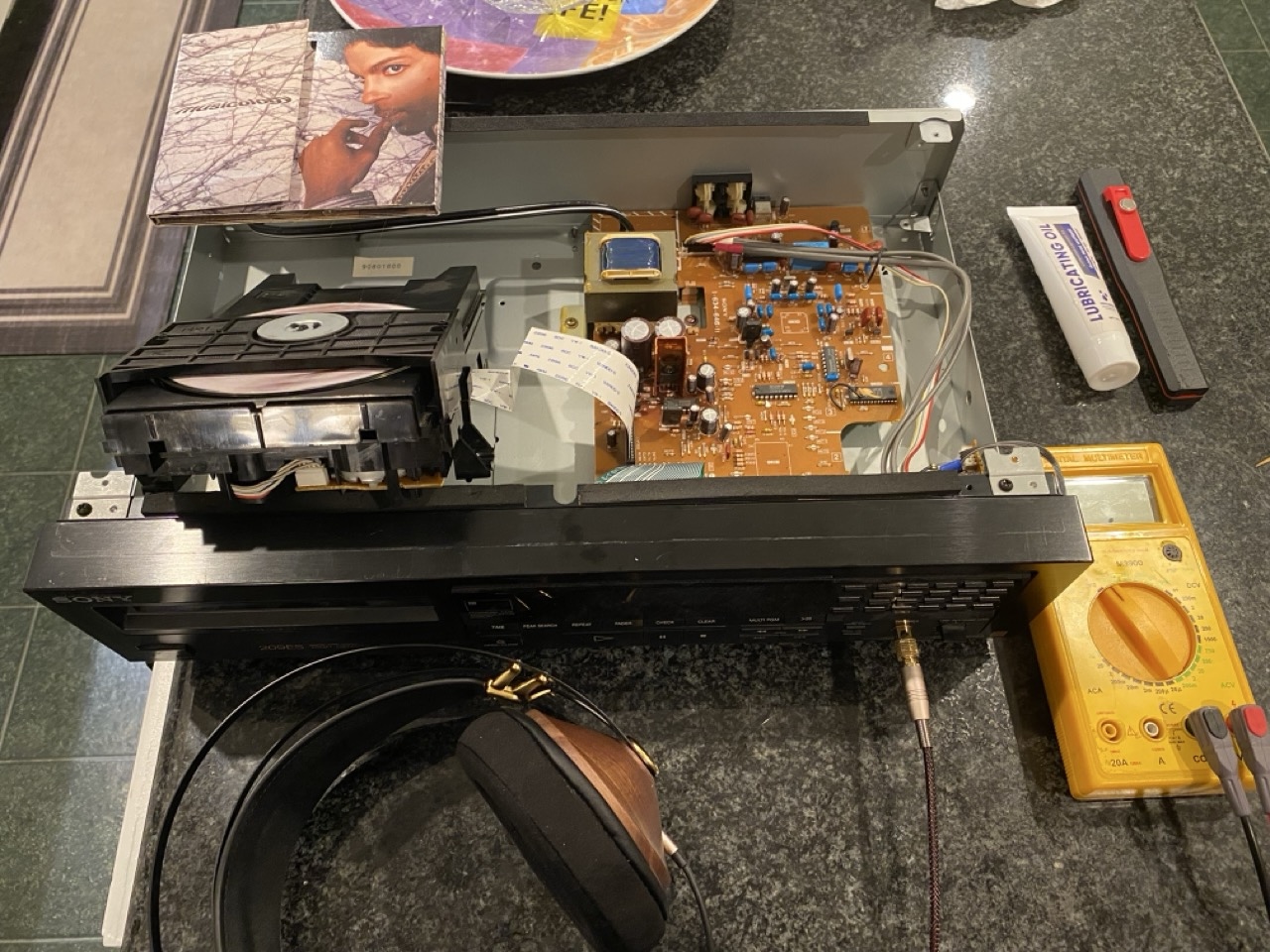 These switches detect tray open/close position and laser home position. If they get oxidized, the player may refuse to function properly.
Back home, I opened the unit and located the leaf switches. Accessing them required partial disassembly of the CD mechanism — which actually turned out to be a blessing. It gave me the opportunity to clean the gears, re-lubricate the rails, and generally freshen things up.
To clean the leaf switches, there’s a small hard plastic cap that must be removed to expose the metal contacts. The recommended method was simple: fold a piece of paper, dampen it slightly with alcohol, insert it between the contacts, and gently slide it back and forth.
I cleaned all three switches, reassembled everything, powered it up…
…and had a working CD player.
Victory.
The Skipping Problem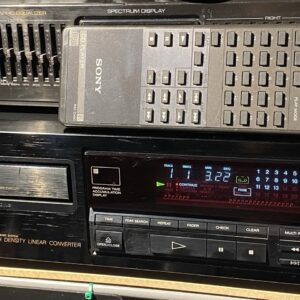
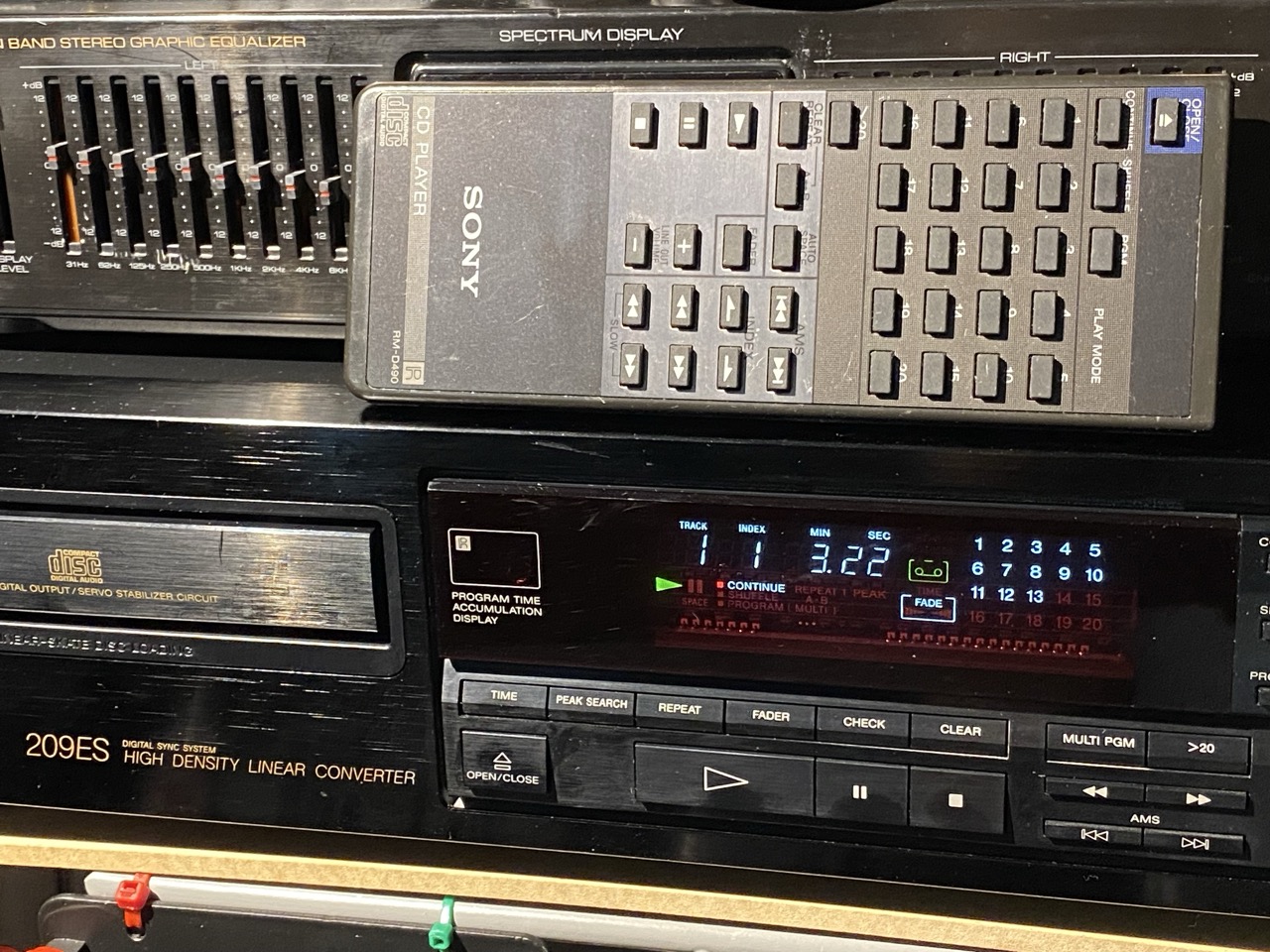
The CDP-209ES took up residence beside my recliner. The sound was great, and the built-in headphone output was incredibly convenient. But there was a problem: if I bumped the stand even lightly, it would skip.
It stayed there until I fixed another issue in my system — a dim display on my Cambridge Audio DVD89. The DVD89 got the old 9V battery vacuum fluorescent display revival trick and swapped places with the Sony.
That’s when I decided to tackle the skipping issue properly.
Oscilloscopes, YEDS-18, and Reality
 I have the Sony service manual for the CDP-209ES. It calls for an oscilloscope and a Sony YEDS-18 test disc to properly set tracking and laser gain.
The adjustment points are accessible through a small hatch under the board, which means elevating the player while powered on. The test points (TPs) are tiny and have nothing convenient to clip onto. One test requires monitoring three TPs at once — at which point I realized I needed to be an octopus.
I abandoned the measurement approach and tried adjusting the trim pots by feel. That did not go well. I was fairly certain I made it worse. I set the player aside.
Round Two: The Trim Pot Discovery
Last week, with some time off, I tried again.
This time I at least confirmed one timing measurement was correct. I had also created a YEDS-18 style test CD from shared tracks I found online. I even recreated some of the emphasis tracks. What I couldn’t replicate were the intentional error tracks that would be present on a pressed Sony test disc.
As I played test tones and music, I gently tapped the chassis while adjusting tracking and gain. Sometimes skipping seemed better… 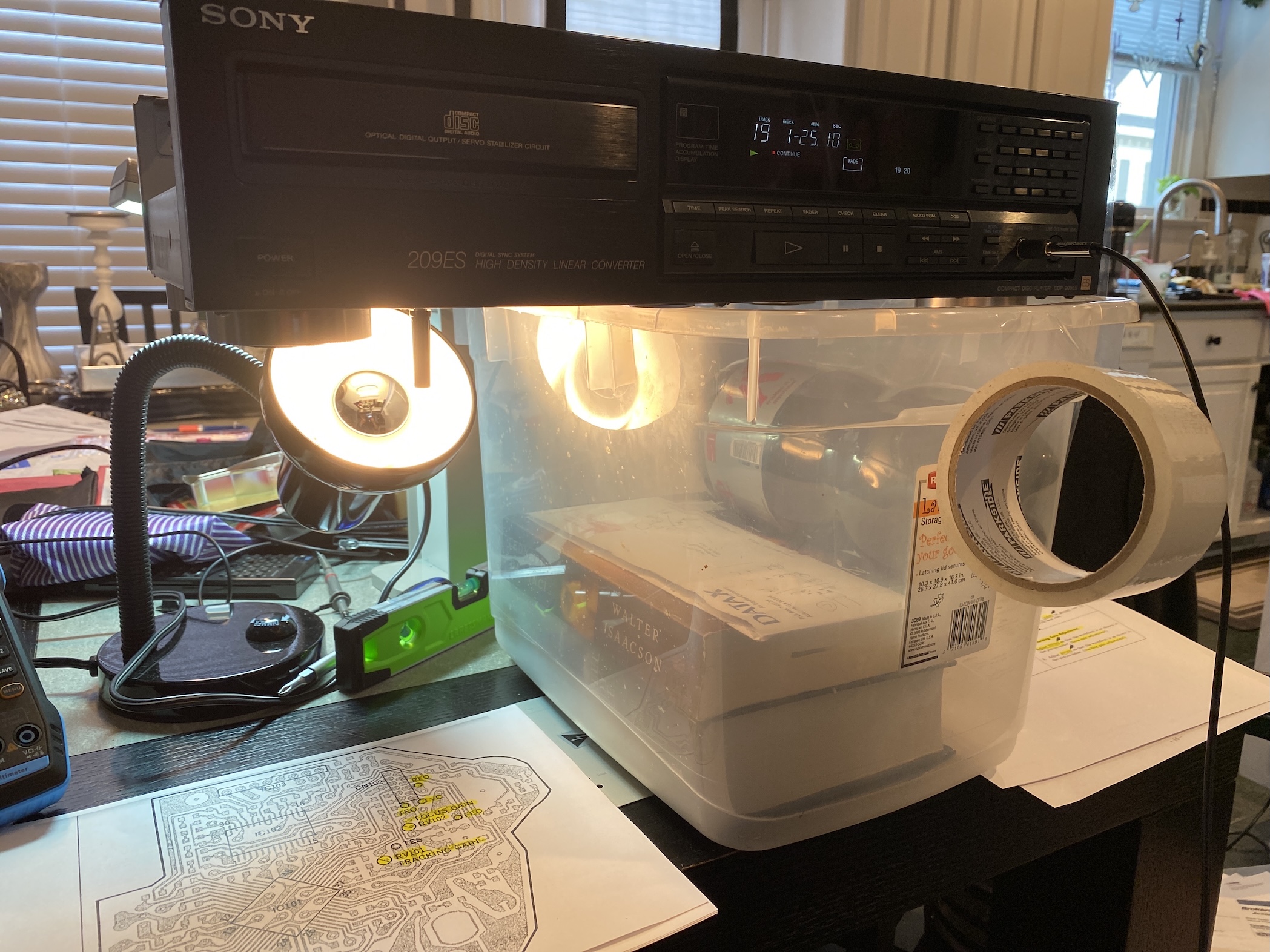 sometimes worse.
Then something didn’t sit right.
A quick search confirmed my suspicion: the trim pots should only rotate about 300 degrees. Mine felt like they were spinning endlessly.
The problem? My insulated screwdriver shaft was too thick to properly engage the trim slot. It was turning, but not actually moving the adjustment.
So I carefully shaved down the insulation to narrow the shaft. Once it could pass cleanly through the board opening and fully seat in the trim slot, I felt it engage.
This time, the trim rotated from roughly 12 o’clock to 10 o’clock — a real adjustment.
I marked the screwdriver with a white paint pen so I could track position. I centered both trims between those endpoints and left them there.
The difference was immediate.
Tracking improved dramatically. Light taps no longer caused skipping. Yes, I can still make it skip if I bang on it — but in its current location on my wire rack shelves beside my desk, that’s not realistic.
Listening Reward
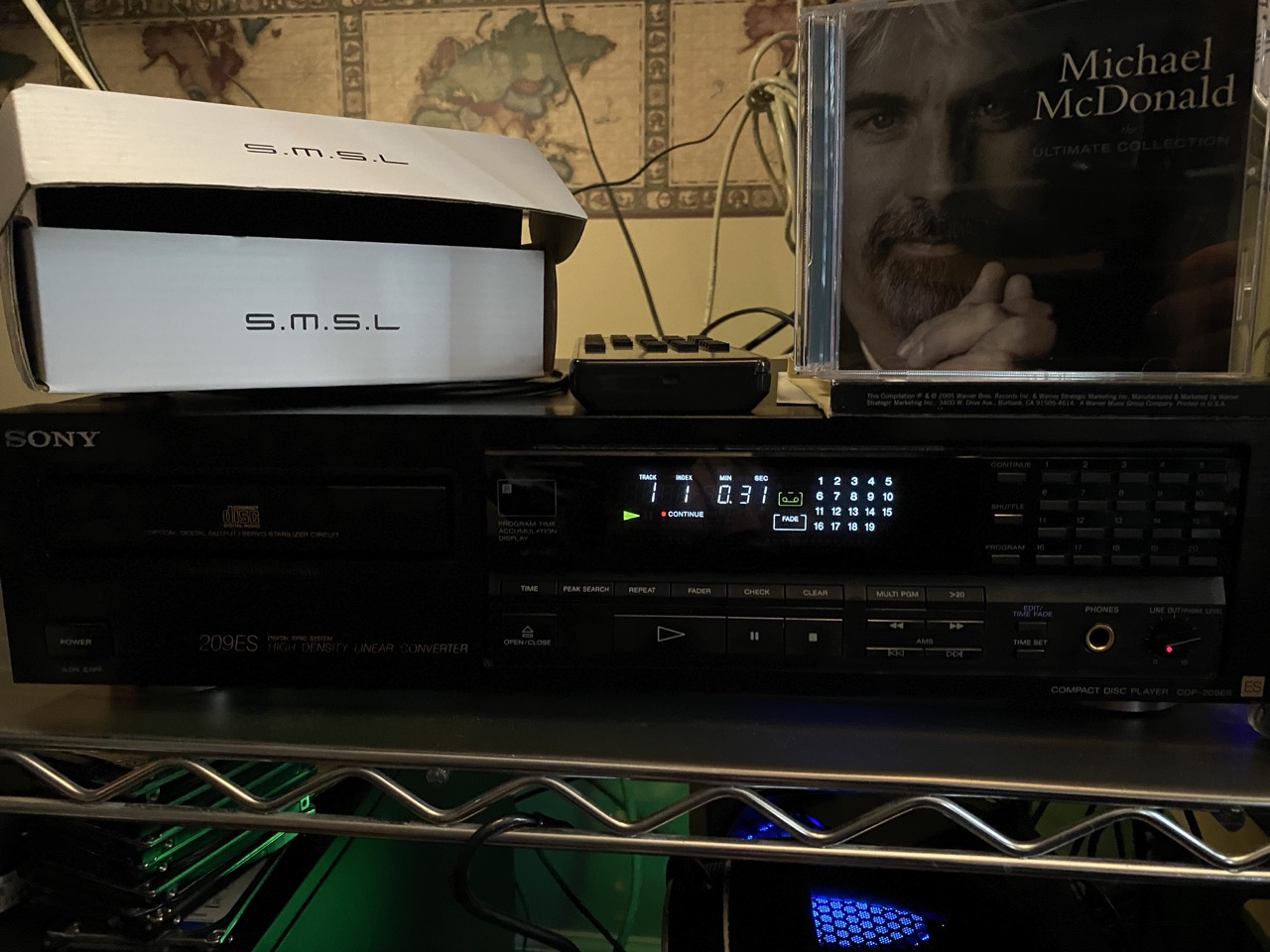
Where the Sony now sits is perfect for working from home. I turn to my right, grab a CD, and let it play — either through the headphone output or via optical into my SMSL SU-1 DAC feeding my AVR, Klipsch The Fives, or even my PC setup.
Today’s listens included:
-
Van Morrison – Greatest Hits
-
Michael McDonald – The Ultimate Collection
-
David Lanz – Cristofori’s Dream
Even though I have an SACD-capable Blu-ray player (BDP-X570) and my original Sony 5-disc carousel connected to the AVR, there’s something satisfying about the CDP-209ES acting as a dedicated critical listening transport.
It feels earned.
What’s Next
I am considering replacing the laser with a new unit from Liberty on eBay while they’re still available. Preventative maintenance might make sense given the effort already invested.
For those interested, I plan to write a follow-up post detailing how I built my own YEDS-18 test CD.
And after that, I may talk about running Subsonic for over 12 years and getting Navidrome running alongside it on my Linux music server. The two platforms approach libraries very differently. I’m currently limiting Navidrome to my FLAC rips, selectively adding higher-bitrate MP3 files from my 80’s night roller-rink DJ days.
Stay tuned.