Every once in a while a thrift store run turns into a small audio adventure. That happened recently when I spotted a Pioneer PD-F507 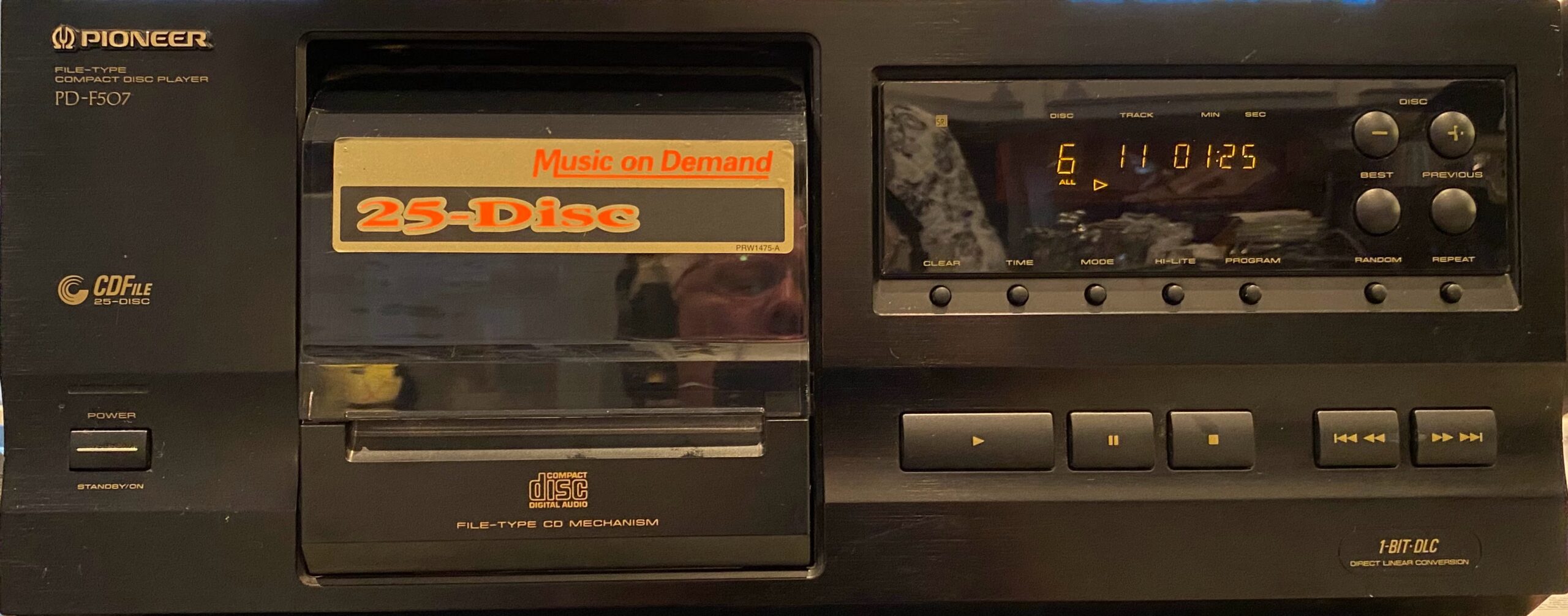 sitting on the shelf for $16.99. For someone who enjoys vintage audio gear and still spins plenty of CDs, a working multi-disc player at that price was hard to pass up.What followed was a fun little project—part thrift store gamble, part light refurbishment—that turned out better than expected.
The Thrift Store Test – When buying used CD players, especially changers, there’s always a bit of risk. Mechanical complexity is usually the downfall of older units. Before committing to the purchase, I grabbed a CD from the rack and loaded it into the player right there in the store. The machine powered up, accepted the disc, and started playing. That was enough of a sign of life to justify the gamble. The only concern came when I carried the player out to the truck. I could hear something sliding around inside the chassis—never a reassuring sound when transporting electronics. Still, at $16.99, the risk seemed manageable.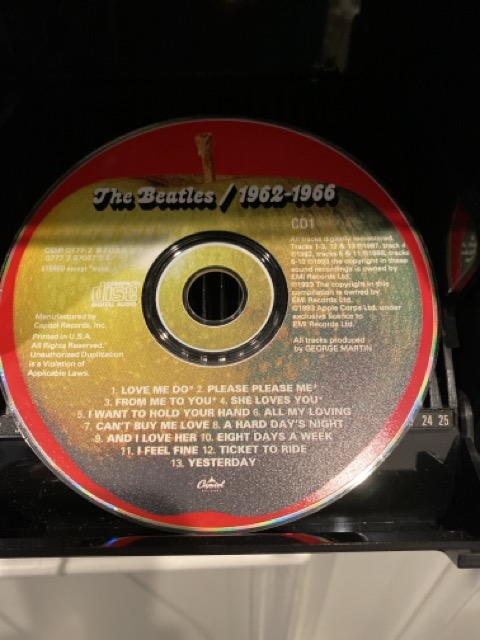
First Inspection at Home – Once I got the player home, I opened the lid to see what was moving around inside. The culprit turned out to be simple: a loose CD that had slipped out of one of the vertical slots in the changer mechanism and fallen into the bottom of the chassis. Once retrieved, everything looked intact and undamaged. These Pioneer “file-type” changers store discs vertically like folders in a cabinet, which is a clever design but also means discs can occasionally slide out if the unit is moved with discs loaded. With the mystery solved, it was time to give the player a proper cleaning.
Case opening: Video
Cleaning and Refurbishing – The unit was surprisingly clean inside, but after more than two decades of service it deserved a little attention.
My steps:
– Blew dust out of the chassis using compressed air
– Cleaned the laser lens carefully with a cotton swab and isopropyl alcohol
– Lightly lubricated the sled rails with a thin coat of white lithium grease
– Applied a small amount of lubricant to the pickup drive gears
– Inspected belts and gears for wear
Everything inside looked solid. No cracked gears, no stretched belts, and the mechanism moved smoothly. The only cosmetic issues I noticed was that the “+” marking on one of the disc selection buttons was worn, which is common on older equipment with screen-printed labels, and a few scratches on the case.
The Remote Control Surprise – The player even came with the original remote control and manual—something that doesn’t always happen with thrift store finds. The remote was missing its battery door, but the previous owner had solved that problem creatively by cutting a small piece of countertop linoleum to fit the opening perfectly. A little clear tape keeps it in place, and honestly it looks surprisingly neat. Sometimes practical solutions beat perfection.
About the Pioneer PD-F507 – The PD-F507 is part of Pioneer’s late-1990s “File-Type” CD changer line. Instead of the traditional rotating carousel tray, these players use a vertical slot system that stores discs like files in a cabinet. When a disc is selected, a small mechanism retrieves it from the slot and loads it onto a conventional CD transport.
This design has a few advantages:
– Fewer large moving parts than carousel changers
– Less stress on the mechanism
– Faster disc selection
– Easy visual access to loaded discs
It’s also just a neat piece of engineering from the era when manufacturers were still experimenting with different ways to manage large CD collections.
Putting It to Use – After cleaning and reassembling the player, I loaded several discs and tested the changer.
Everything worked smoothly:
– Disc indexing was accurate
– The mechanism moved quietly
– Playback was stable with no skipping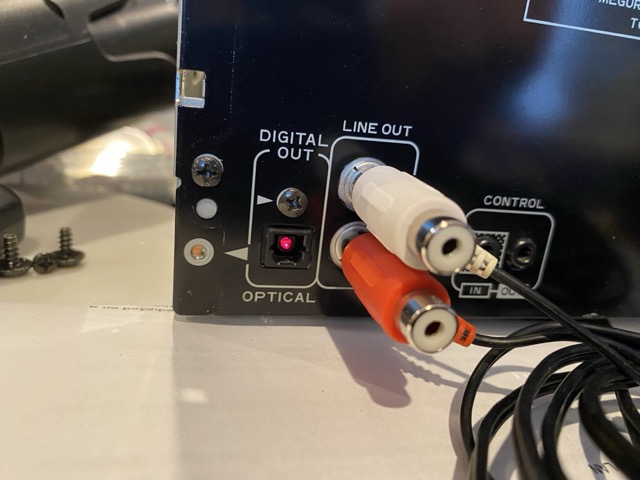
For serious listening, this unit does have a digital output (TOSLINK) which worked with my SMSL SU-1 and my other single-disc players may may have a challenger on sound quality, but the Pioneer has something those don’t: convenience. With 25 discs loaded, the player becomes a great background music machine. Hit random play across all discs and you essentially have a physical version of a shuffle playlist.
Final Thoughts – Finding vintage audio gear at thrift stores is always a bit of a gamble, but sometimes those small risks turn into satisfying projects.
For $16.99, this Pioneer changer turned out to be:
– Fully functional
– Easy to clean and service
– A fun addition to the system
It’s now loaded with a mix of thrift-store finds and favorite CDs, ready to play for hours without needing attention. Not bad for a player that might otherwise have ended up forgotten on a shelf. Sometimes the best audio upgrades don’t come from expensive purchases—just a little curiosity, a screwdriver, and a good thrift store.